Creative Technology Studio

We build magic,
like it's 2036.

We make hardware that looks a decade ahead, help teams work alongside tools that think, and engineer software to production standard.

  • 01Hardware
  • 02Practice
  • 03Software

Events people walk into. Objects made once, properly. Software that's still running in ten years. Those are the briefs we get excited about.

Projects

The record so far.

PRJ-01Marketplace / Seller AppFeb – Dec 2025

Motorway Android App

We designed and built the server-driven UI (SDUI) system behind the Motorway Seller app, where people list their car for sale, and began moving its interface onto it. Screens on the system are composed on the back end and change without waiting for an Android release.

  • Android
  • Server-Driven UI
  • Architecture
PRJ-02Fleet / Collection AppsJan 2026 – Ongoing

Motorway / Mobilize

Two Android apps for the Mobilize partnership. On Motorway Collect, the driver app for collection jobs, we built SDUI flows on the approach proven in the Seller app. We also helped build Motorway Inspect & Collect from the first line of code: a new app that walks people through returning a lease car, with AI-guided inspection and costs known upfront.

  • Android
  • Server-Driven UI
  • New App
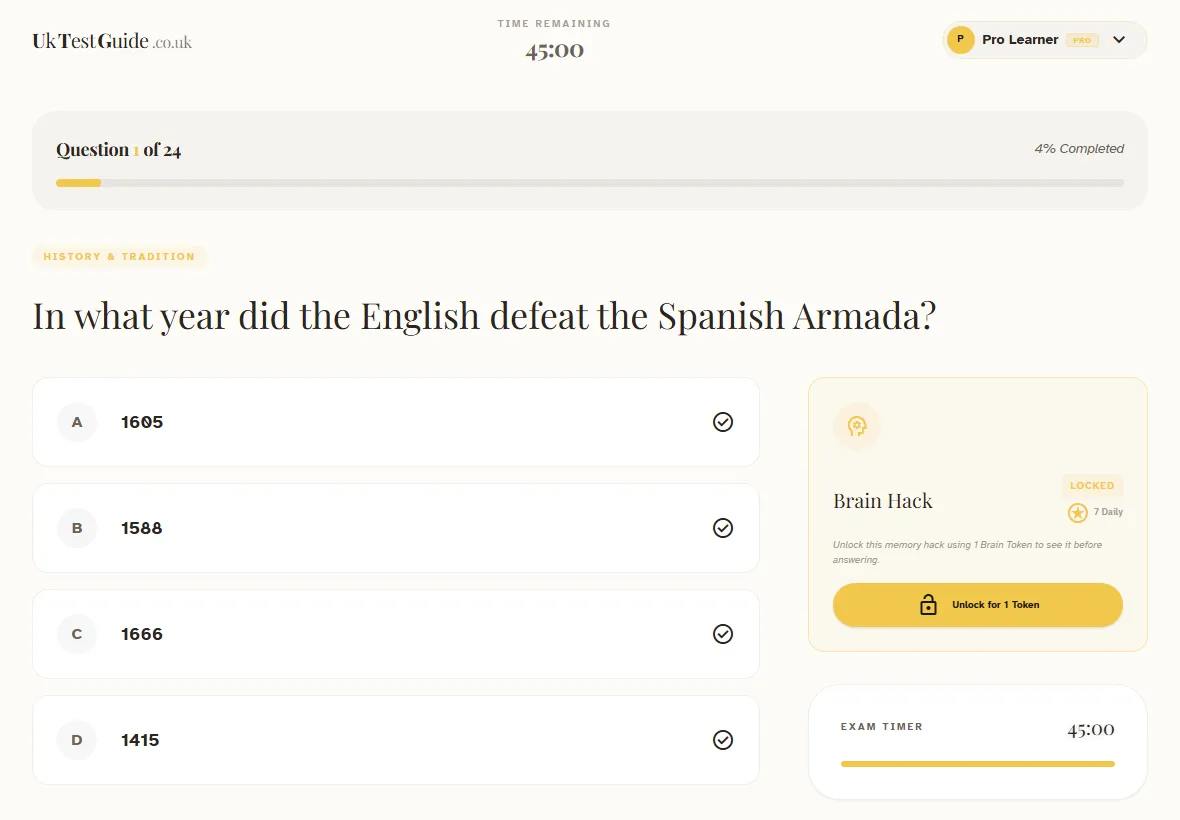
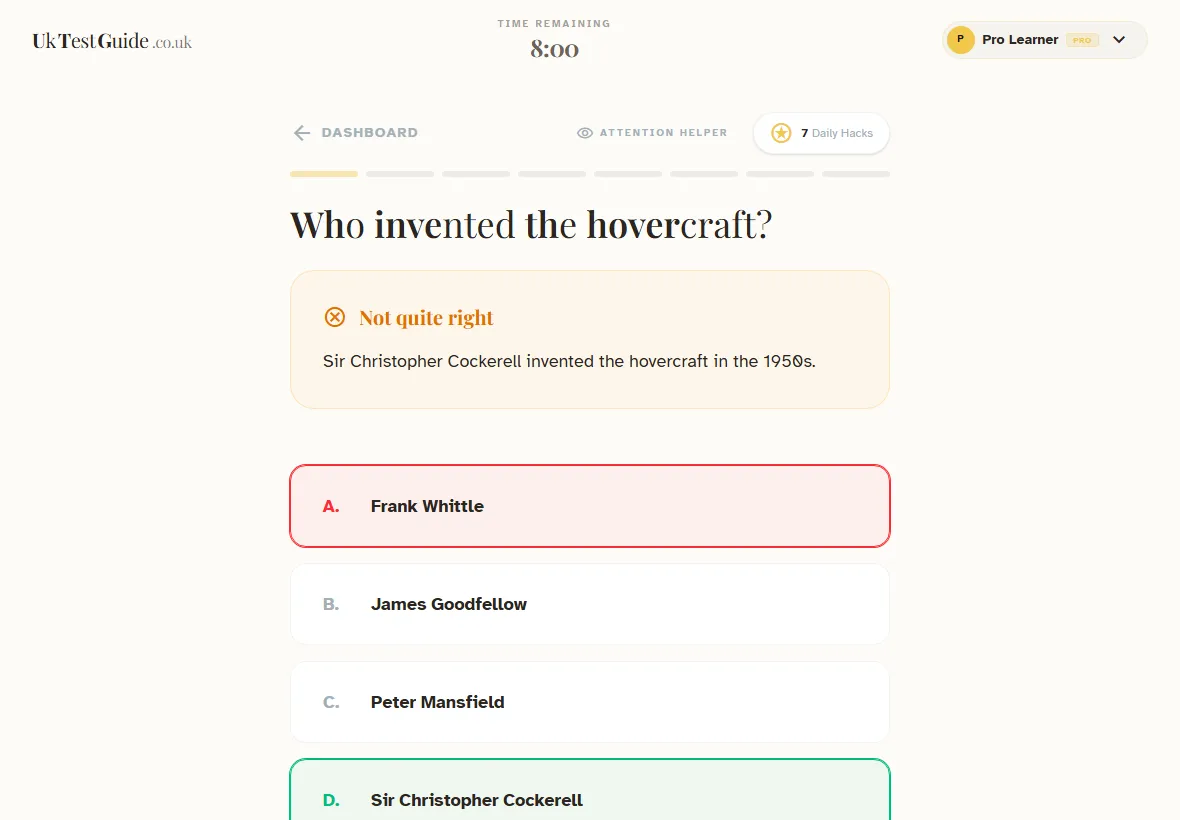
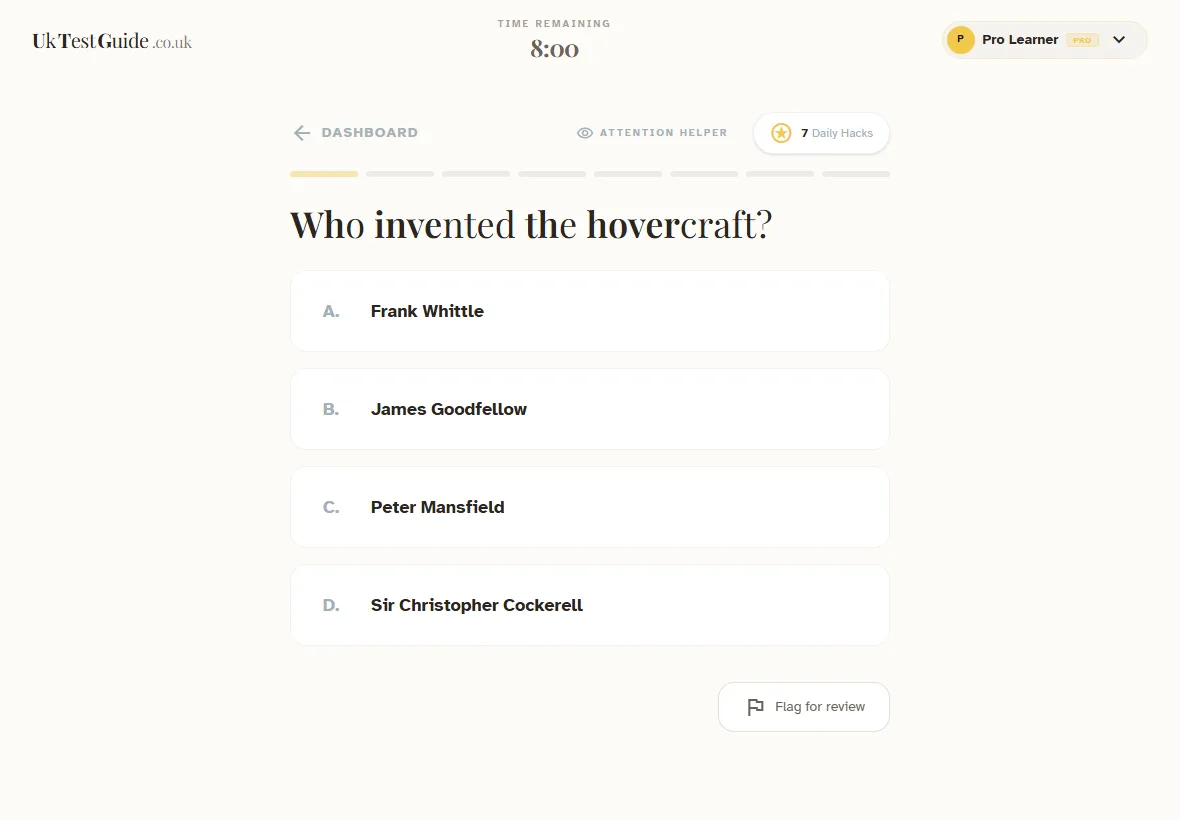
A practice question in the UkTestGuide.co.uk app
PRJ-03Own Product / Web AppMar 2026 – Ongoing

UkTestGuide.co.uk

A web app of realistic practice tests for the Life in the UK test, the exam people sit for British citizenship. Our own product, built and run in-house, and designed for people with ADHD and other neurodivergencies: nothing on it should need a second read.

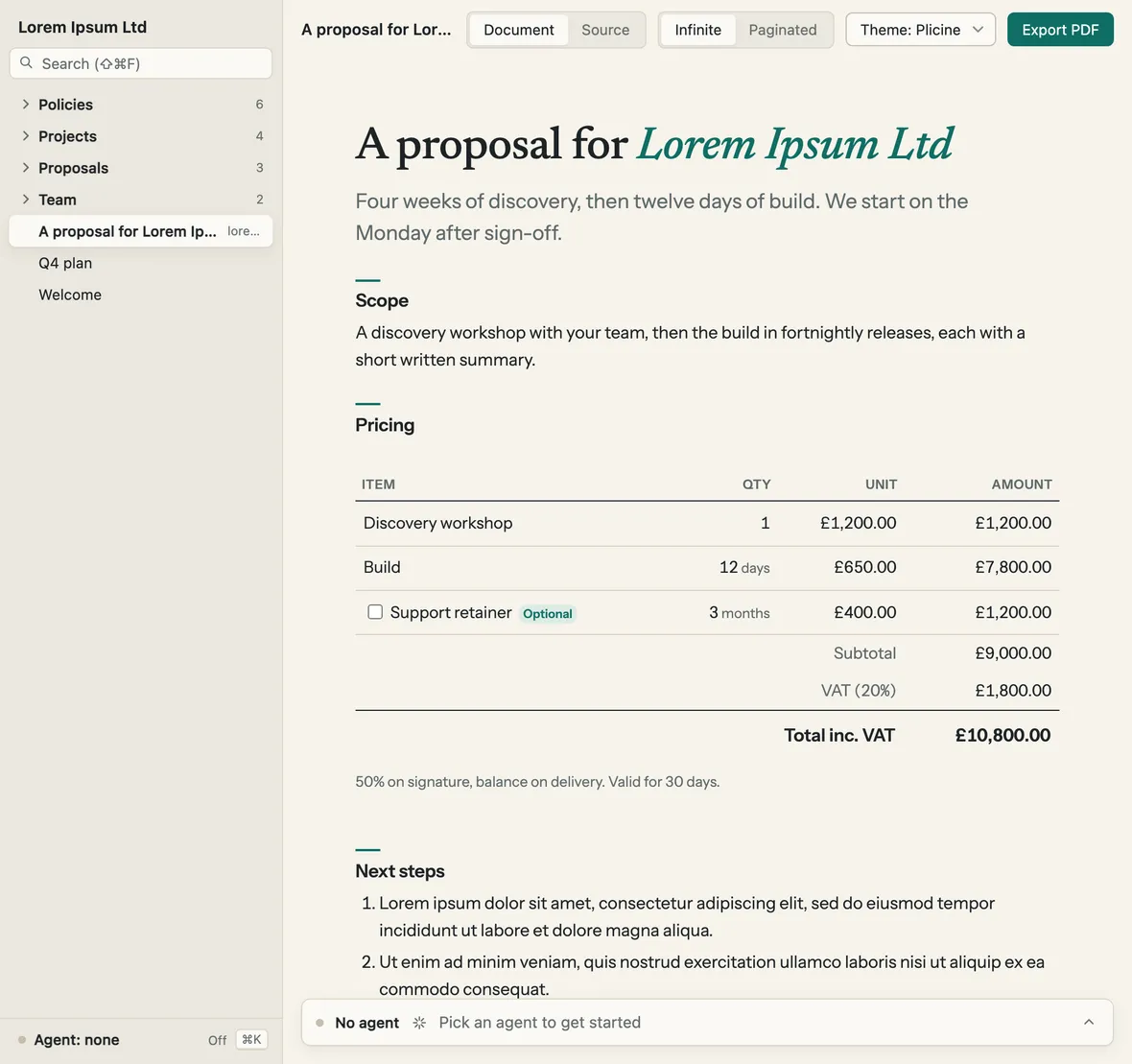
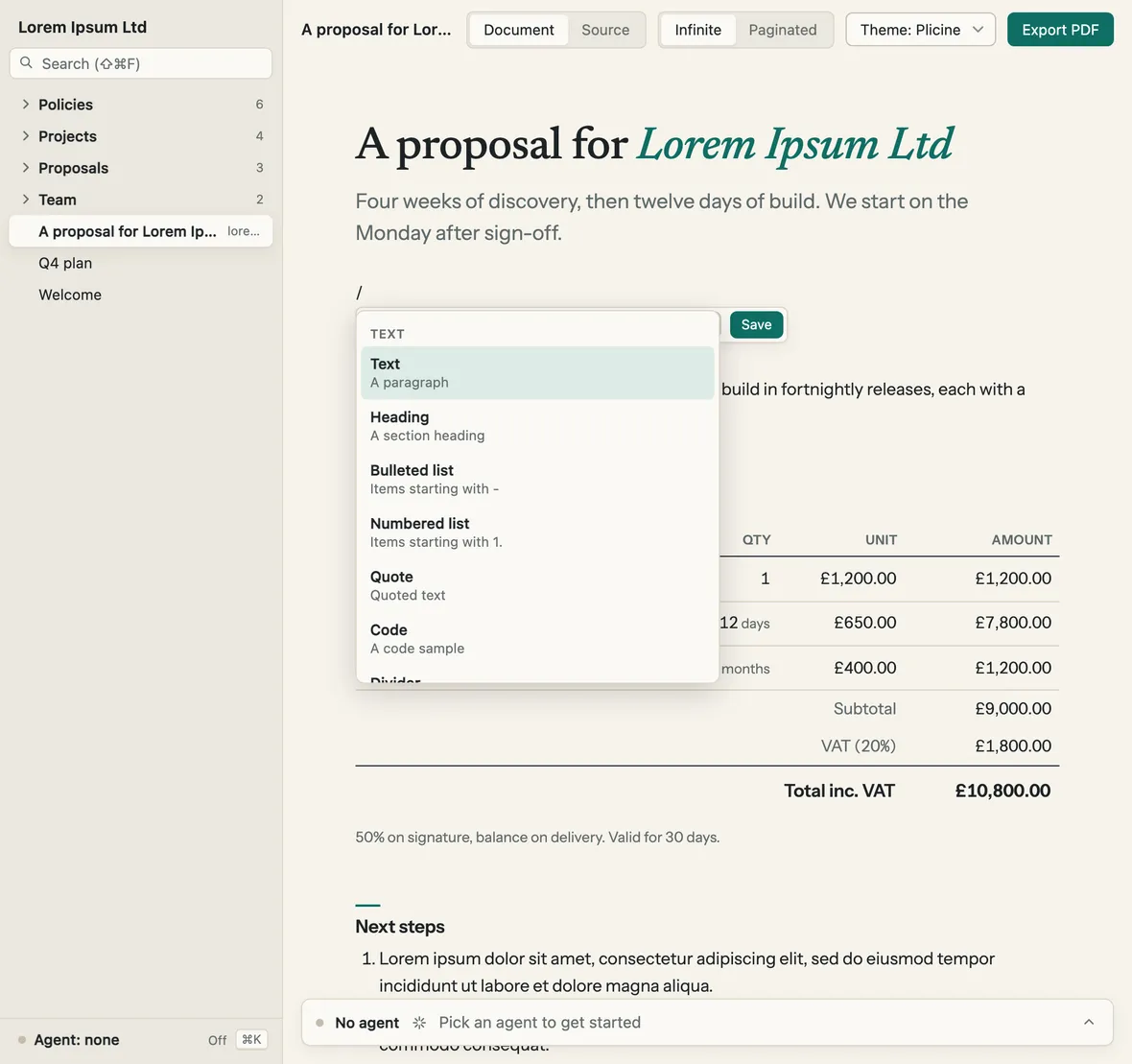
A proposal open in Plicine, with the vault's folders beside it
PRJ-04Own Product / Document AppSep 2026 – Ongoing

Plicine

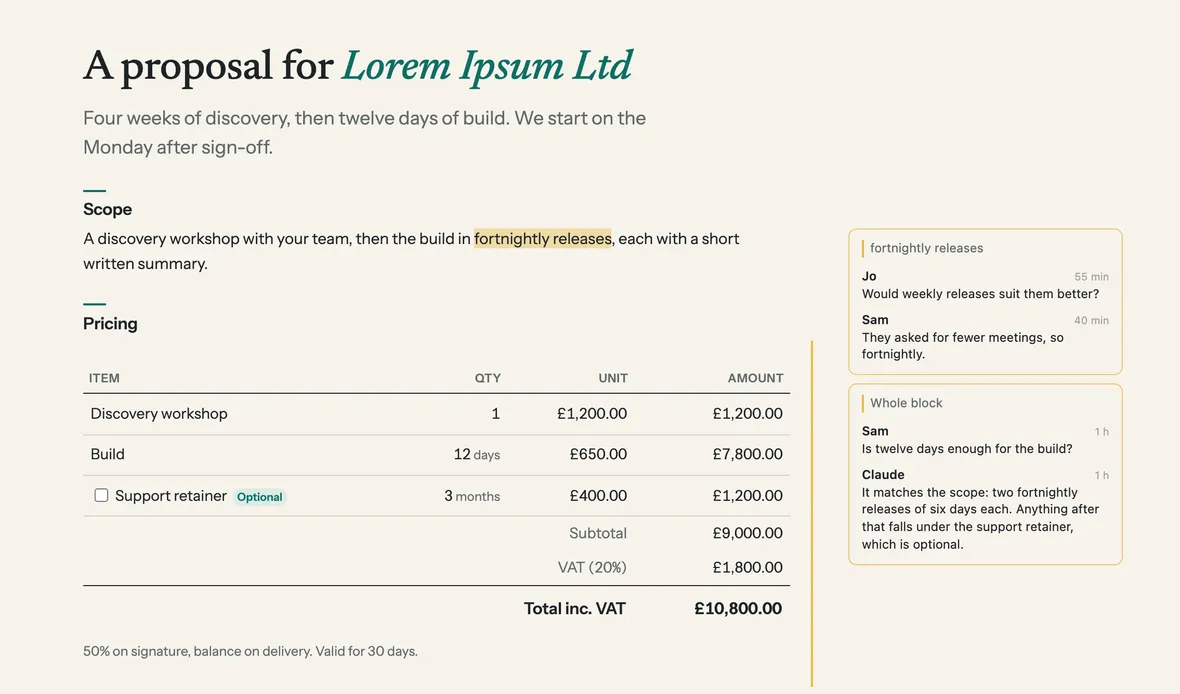
A document app for one person or a whole company. Every document is a plain Markdown file in the team's own Drive, Dropbox or OneDrive, so it outlives the app that made it. Documents can hold interactive blocks such as pricing tables and Gantt charts, and any of them can go out as a designed, paginated PDF. Our own product, built in-house and now in closed beta.

Process

The same four steps. Every time.

01

Discovery

The hard questions come first, before anyone draws a screen. Most of what a project could be is cut here. What's left is what it has to be.

02

Prototyping

We build ugly and fast. By the end of week one there's a prototype, physical or digital, and it's allowed to fail. A failure in week one costs a week.

03

Engineering

Then we rebuild it properly. The prototype becomes a production system, tested and written for whoever has to look after it in five years' time.

04

Refinement

Once it works, we make it feel obvious, down to the timing of a transition and the weight of a press. The look comes last. By then there's something solid to put it on.

The Studio

Solder on one side.
Code on the other.

We build both halves: the object you hold and the software that runs it. A robotic installation, a retail interface, an Android app, a network of connected sensors. Each one gets the care you'd give steel or oak, because each one should still be working long after the launch photos.

Our philosophy
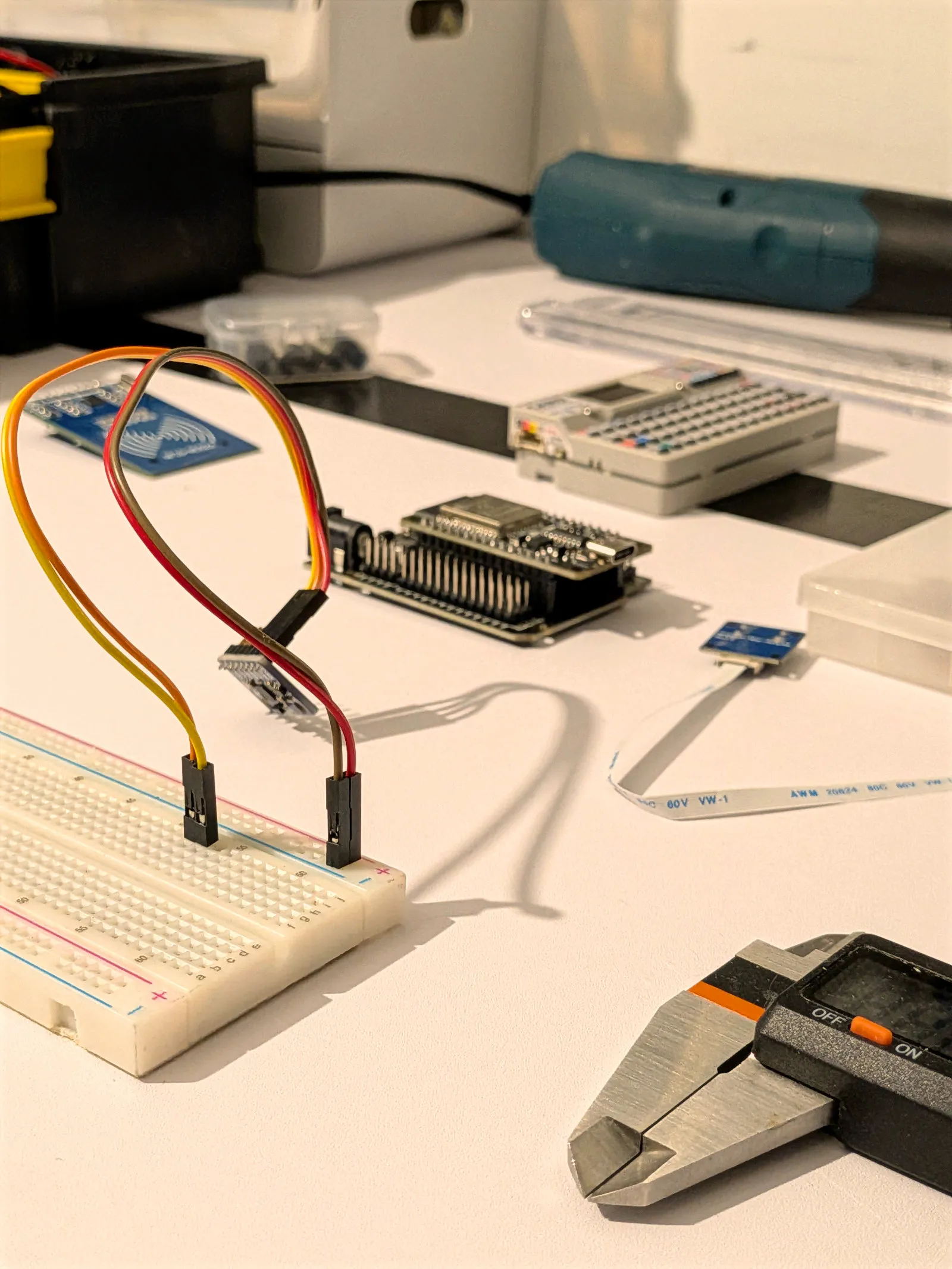
The hardware bench: a breadboard wired to a microcontroller, sensor boards and digital calipers laid out on a white surface
FIG 01. Hardware
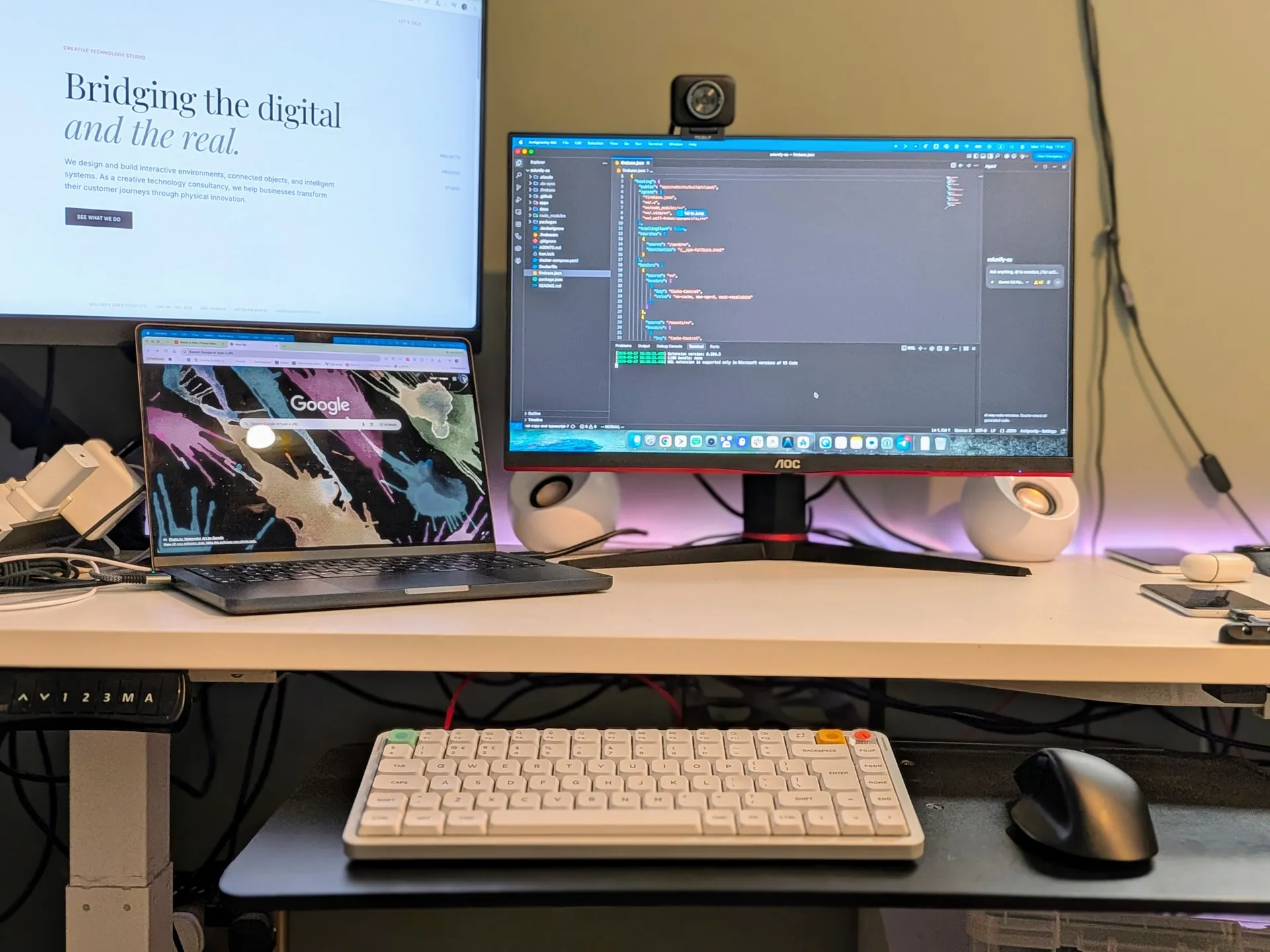
The software desk: a standing desk with a monitor showing the studio's own codebase in an editor, alongside a laptop and a mechanical keyboard
FIG 02. Software

Analytics

We'd like to use anonymised analytics to see how the site is read. No personal data is collected.